
Flat feet:
Parents often get concerned that their children have flat feet. Up to a certain age every child has feet that may be described as “fat, flat and floppy”. This is normal. However as with most things there are degrees of what is acceptable and this is when an experienced clinician can decide on what can safely be left for the child to outgrow and what needs early intervention in order to prevent problems later on in life.
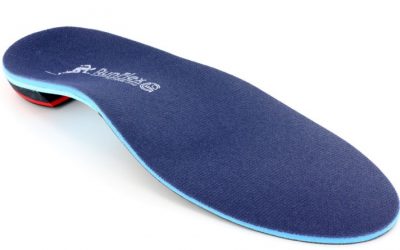
By the age of six your child should have outgrown their developmental changes and it would be appropriate to start any treatment then. However in severe cases treatment can commence at any age. In those cases treatment is commonly managed by means of orthotics. It may be that the wearing of orthotics is for a short period only, or as the child gets older only for sports but some may need orthotic therapy throughout their lives.
Intoeing:
Intoeing or pigeon / hen toeing may be a cause of tripping in children. In the majority of cases this will improve with maturity with no treatment. However in those cases where it is a problem the condition needs to be carefully assessed to find out at what level it originates from. This may be at the level of the hip, knee, lower leg or the foot itself. Once this is identified treatment can then be directed to the cause. Posture is very important in all cases and will be discussed at great length. Treatments may consist, in the very mild cases, to advice only or depending on the age of the child to special orthotics to splinting.
Toe walking:
Walking on tip-toe is not uncommon in young children and in many cases will resolve itself as the child matures and gets heavier. It is often a concern to parents because the child trips a lot or other people comment on it causing embarrassment. It may simply be habitual or due to tight heel cords or there may be a neurological reason behind it. Careful assessment will be able to identify the likely cause.
Curly toes:
It is not uncommon to see babies with toes that over ride or under ride the toes next to them. Usually this corrects itself when the child starts to weight bear. When it persists it may cause rubbing of the affected toe(s) in footwear or to nail problems due to abnormal pressure on the nail. Persistent curly toes in the older child may have a biomechanical cause behind it where the curling of the toes is an attempt by the child to stabilize the foot when walking. A biomechanical examination where the child’s gait is assessed may be useful in such cases. Treatment is age related and may consist of manipulation at home through to taping, splinting or in the most severe of cases to surgical soft tissue release.